Friday, September 12, 2014


Wednesday, September 10, 2014
my new book: Beyond Borders
Dear readers of the Badi' Blog,
Those of you who are my "friends" on facebook will already know that my book has been published and is now available on amazon, here:
In the acknowledgments of Beyond Borders I thank you, the readers of my now pretty much inactive blog, for the influence of your feedback in writing this book. Again, thank you.
Here is the blurb for the book:
Here is the blurb for the book:
"Worldwide, instantaneous communication at our fingertips is creating a global society before our very eyes. Whether we make it a heaven or a hell depends on how we conceive of world government. InBeyond Borders, author John Taylor presents opinion polls showing that the majority of people, in the majority of nations, believe we are in need of a world government. Taylor then offers up one of history's forgotten geniuses, John Amos Comenius, who in the mid-1600's made the first detailed proposal for a democratic world government. His idea starts with unifying the continents, rather than squabbling nations.
Beyond Borders explores Comenius's insight that the only global governance safe from tyranny is one where everyone is invested in the happiness for all, where all resources of humanity go to aiding each of us to become a balanced, educated and effective world citizen. However diverse our interests, this will take us down three paths of convergence: faith, science and politics. Comenius, one of history's greatest minds, solved the most controversial issues of our time, how to balance governmental authority and personal freedom, how to relieve tensions among science, religion, and politics, and how to blaze our own path to common prosperity and enlightenment."
Thursday, June 05, 2014


Saturday, May 03, 2014
Thursday, March 06, 2014

Friday, February 21, 2014
Tuesday, February 18, 2014
Friday, February 14, 2014
Britannica article on democracy
Thoughts
about the Encyclopedia Britannica article on democracy
My
Encyclopedia Britannica, 1967 Edition, I am using as an end table beside our
chesterfield.

Months
ago, though, I dug out the volume with its article on democracy and went
through it. Only later did the significance of the article, and its place in
history, sink in. At first blush the article just seemed dated, written as it
was during the Cold War.
But then it struck me how our definition of democracy
has changed in the decades since it was written. We think of democracy as one
thing, but the author of this article distinguishes two breeds of democracy,
constitutional and totalitarian, the latter meaning democracy under communist
regimes.
Such was
the influence of Marxism that the author of this Britannica article had to take
its claim to democracy seriously. Its conclusion notes that democracy in the
20th Century had spread but it was still doubtful which of the two types,
constitutional or totalitarian, would win.
"Democracy
was in the ascendant everywhere, but only the future could tell whether the
prevailing form of democracy would prove to be constitutional or
totalitarian." (EB, Democracy, Vol. 7, p. 223)
Two
major features qualify the totalitarian breed of democracy as a democracy: one,
it includes a complete bill of rights and, two, its bicameral legislature
elected by universal suffrage. However, the leading role of the communist party
was unchallengeable, and it permitted no political action without its approval.
Hence, totalitarian.
"In
any normal sense of the word, democracy, a form of government which provides no
opportunity for the legitimate expression of popular preferences and which
confines the right of significant political action to a small minority of the
population is the reverse of democratic. The communists insist, however, that
the constitution of 1936 is the most democratic in the world, and that liberal
constitutions by comparison are nothing more than facades masking the realities
of a basically undemocratic society. This conclusion follows logically from the
premises of the Marxist conception of democracy." (EB, Democracy, Vol. 7,
p. 222)
The
total might of the party did not interfere with democracy because, according to
Marxist theory, everything human is derived from the material and economic. The
communist party only made sure that the economic fountainhead was pure. As long
as everything is informed by economics, how can the people not approve of the
result?
The
author of this article accepts the possibility of "totalitarian
democracy" because, according to the definition of democracy, both liberty
and equality of citizens are essential features, but if you cannot have both,
equality is more important.

He cites the following quote from Aristotle in
evidence,
"A
democracy is a state where the freemen and the poor, being in the majority, are
invested with the power of the state ... The most pure democracy is that which
is so called principally from that equality which prevails in it; for this is
what the law in that state directs; that the poor shall be in no greater
subjection than the rich; nor that the supreme power shall be lodged in either
of these, but that both shall share it. For if liberty and equality, as some
persons suppose, are chiefly to be found in a democracy, it must be so by every
department of government being alike open to all; but as the people are the
majority, and what they vote is law, it follows that such a state must be a
democracy." (Aristotle, Politics, IV, ch. 4, 1290b, 1291b))
Is a
constitutional democracy open to the freedom and equality of all? Are its
citizens allowed to vote in laws? Has that happened in living memory? Be that
as it may, here is what this Britannica author says in defense of
constitutional democracies against their rival school, totalitarian democracy.
"If
democracy is primarily a question of political rights, the democratic claims of
the U.S.S.R. are nonsense. Even if democracy is primarily a question of
economic equality, those claims are still dubious since many other countries,
including Britain and the United States, have gone a good deal further than
communist Russia in equalizing incomes. In the special terminology of Marxism,
however, the necessary and sufficient condition of democracy lies simply in the
elimination of private ownership of the instruments of production. There is no
private capital in the U.S.S.R. From this it follows that in the very special
Marxist sense of the word, the USSR is far more democratic than any liberal
state." (EB, Democracy, Vol. 7, p. 222)
This is
the passage that made me do a double take. A week long double take. I finished
reading and set the article aside for about a month. It kept bugging me, what
it said about equality in constitutional democracies. Finally, I just had to go
over it all again and set it down.
What the
author says about economic equality progressing more in constitutional
democracy shows that it was the competitive pressure of communism to beat them
out at their own game, equality, that pushed the capitalists. As soon as
Europe's communist regimes began to totter, that pressure went away and the
present extreme wealth loosed its bounds. Now capitalism has become out and out
plutocracy.
Tuesday, January 28, 2014
Sunday, September 22, 2013
Swearing and Suicide
One characteristic of the latest generation
of youth is pervasive profanity. Abusive and scatological speech is seen to
be part of manliness. In my day, this was kept in check by censorship. Back
then, cowboys were the average boy's heroes, and they were portrayed in the
media largely without swearing; convicted felons have taken over their place as
role models today, celebrities like Akon and 50 Cent, who revel in prison
culture.
This describes the devastation that this decline in values, along with several other factors, such as over-medication, plastic exposure and video games, are having on boys and their ambitions for their future. Homer Simpson, it seems, is such a klutz and a loser that young men are actively avoiding marriage and family life, just to avoid the chance of imitating Homer. The author is so clear in his exposition that my 14 year old son and 19 year old daughter willingly listened as I read most of the text to them aloud. We even have gone out and watched some of the movies it recommends, such as "Failure to Launch" and "The Big Lebowski."
Anyway, profanity. Since this book was written ten years ago, the problem of suicide has become even more severe than the statistics the author cites indicated. Today, suicide has passed auto accidents as the leading cause of death among teens.
It seems to me that one reason for such popularity of self-slaughter is profane speech.
So common is it among preteens that virtually all of them do it whenever they can. My son told me last night that when he was in grade eight last year, he was a member of the "non swearing club." This was not an organized club, but just the result of a chance encounter on the playground. Two kids, a boy and a girl, one of them a Jehovah's Witness, had noticed that they were the only kids in their grade who did not swear. My son remarked, "I do not swear either, I'd like to be a member of your club."
Anyway, profanity by nature tends to be non life affirming. It is, somebody said well, like sprinkling little declarations of war throughout your speech. This is more damaging than I think these youth realize. We owe our lives to our ability to talk. Without it, humans would still be a few scattered tribes of little monkeys scrabbling out our existence on Africa's savanna.
More important, profanity denies God, the God of love, the God of life. As Baha'u'llah says, "The tongue I have made for mention of me, defile not..." Or as the beloved disciple put it,
"In the beginning was the word, and the word was with God, and the word was God."
If our words are saturated with hate, it is only natural that we should start to lose our taste for living. Words kill, and if there is no enemy to kill, young people kill themselves. That is probably one reason why the prohibition against profanity is so strong in this new Revelation. I will finish with what that greatest of early scholars in the Baha'i faith, Mirza Abu'l-Fazl, had to say about the prohibition against profanity.

from: Mirza Abu'l-Fadl, The Brilliant Proof
"Seventh: The command prohibiting cursing and execration and making it obligatory upon all to abstain from uttering that which may offend men. For, as is evident in moral science, cursing, reviling and speaking in harsh words and offensive phrases is one of the greatest causes of alienating hearts, filling minds with rancor, creating hatred and animosity among the peoples and igniting the fire of calamitous warfare among men.
"Thus it is said by wise men: "Verily, war begins in words;" and the poet Firdaws'i has said: "A mere word is the cause of warfare." Another verse illustrating this point at issue is "The wound inflicted by the tongue is deeper than inflicted by the sword."
"Were one to ponder over the differences and schisms already spoken of which arose among the Christian peoples, creating different sects and schools, such as the Aryans, Nestorians, Gnostics, et al., kindling the fire of terrible battlefields and violent calamities, he would clearly find from the testimony of authentic history that the principal and initial cause of such divisions and disasters was the difference of opinion between two religious doctors, which would result in discussion and controversy.
"In order to overcome his opponent and demonstrate the correctness of his own view, or because of believing his own opinion correct, each would so persist in his attitude that it would finally lead to harshness towards the other. This harshness would gradually lead to insinuating remarks and annoying statements which in time would culminate in reviling, execrating, fighting and even bloodshed.
"Now the harmful outcome of these religious fights and their evil effect upon human society needs no mentioning here. For the calamities caused by these differences during the past ages are recorded in the historical books of every nation, and the hardships which have continued down to our time as the painful result of those dissensions are evident to men of understanding.
"Perhaps someone may advance an objection saying that ordinances prohibiting anathema and execration are found in the other Heavenly Books, as, for instance, the commands of His Holiness Christ, well known as the Sermon on the Mount, wherein He most lucidly states, "Whosoever shall say thou fool! is in danger of hell fire." (Matt. 5:22).
In the Qur'an it is stated: "Revile not those whom they call on beside God, lest thy, in their ignorance despitefully revile Him." (Qur'an 6:106, Rodwell, p. 327).
The answer to this objection is evident to the people of insight, for such ordinances and prohibitions are considered as educational commands in the estimation of the learned and not as laws and enactments of religion. Consider this command of the Sermon on the Mount, wherein He states:
"Whosoever is angry with his brother without a cause shall be in danger of the judgment." (Matt. 5:22).
Again He says: "Lay not up for yourselves treasures;" (Matt. 6:19).
And again: "Take therefore no thought for the morrow."(Matt. 6:34).
Also: "Whosoever shall smite thee on thy right cheek, turn to him the other also;" (Matt. 5:39); and "if any man will sue thee at the law, and take away thy coat, let him have thy cloak also." (Matt. 5:40). Then later on He says: "Give to him that asketh thee, and from him that would borrow of thee turn thou not away."(Matt. 5:42).
It is fully evident that the learned men and doctors of the Christian and Muhammadan religions have not considered these ordinances as imperative. Men of intelligence versed in law and jurisprudence have not deemed those who disobeyed these laws deserving of punishment and trail.
Nay, as already mentioned, they have unanimously accounted them educational laws. Moreover some of those laws are such that the doctors have not considered those slighting them as transgressors or evil-doers before God.
For instance, "Whosoever shall smite thee on thy right cheek, turn to him the other also," "Give to him that asketh thee," and "from him that would borrow of thee turn thou not away."
The above statement will clearly show why such commands and ordinances were not considered by the leaders of the Christian peoples as imperative and obligatory and why they could not remove cursing and execration from among the community.
But in the Baha'i religion the commands prohibiting cursing, reviling, swearing and blasphemy have been revealed as imperative and obligatory laws. The responsibility attaching to the violators has been revealed in various Tablets.
Emphatic commands have been issued in regard to the purity of pen and tongue, prohibiting the writing or speaking of that which will offend men.
For example, although in various Tablets such as the "Ishrakhat" and others, the law prohibiting cursing and execration has been explicitly laid down, nevertheless Baha'u'llah, during His latter days, in the Blessed "Book of the Covenant" fortified and emphasized the above law by addressing the following command to the people of the world:
"O ye people of the world! I exhort ye towards that which is the cause of the elevation of your station! Hold fast to the fear of God and adhere to the hem of kindliness! Verily I say unto you, the tongue is for the mention of good; defile it not with unseemly words. Verily God has forgiven the past. Hereafter all must utter that which is seemly. Shun anathema, execration and that whereby man is perturbed. The station of man is great. Some time ago this lofty word was revealed from the treasury of the Pen of Abha: 'Today is a great, blessed Day! That which was latent in man is today revealed and become manifest. The station of man is great, should he adhere to veracity and truth and remain firm and steadfast in the Cause.'"
Every intelligent soul who reflects upon this utterance: "Verily, God has forgiven the past; hereafter all must utter that which is seemly," "Shun anathema, execration and that whereby man is perturbed," will clearly see how emphatic an ordinance has been given forth ratifying the prohibition of anathema and execration.
Because according to the law current among the people of knowledge the purport of this blessed utterance is an explicit prohibition concerning anathema and execration The intended purpose thereof is the unpardonable position of the one who violates this mighty command and decisive blessed ordinance.
(Mirza Abu'l-Fadl, The Brilliant Proof, pp. 31-32)
...
That is not to say that cowboy culture was
all that healthy. The American West where cowboys roamed was as rebellious,
lawless and power mad as any penitentiary. But in frontier culture, women were
needed to help settle the land. As a result, the cowboy valued them. Well, the
good guys anyway. They treated women with kindness and respect. Not so prison
culture, with its ho's and worse.
I am reading this book:
Leonard Sax, Boys adrift; The five factors
driving the growing epidemic of unmotivated boys and underachieving young men,
Basic Books, New York, 2007
Anyway, profanity. Since this book was written ten years ago, the problem of suicide has become even more severe than the statistics the author cites indicated. Today, suicide has passed auto accidents as the leading cause of death among teens.
It seems to me that one reason for such popularity of self-slaughter is profane speech.
So common is it among preteens that virtually all of them do it whenever they can. My son told me last night that when he was in grade eight last year, he was a member of the "non swearing club." This was not an organized club, but just the result of a chance encounter on the playground. Two kids, a boy and a girl, one of them a Jehovah's Witness, had noticed that they were the only kids in their grade who did not swear. My son remarked, "I do not swear either, I'd like to be a member of your club."
Anyway, profanity by nature tends to be non life affirming. It is, somebody said well, like sprinkling little declarations of war throughout your speech. This is more damaging than I think these youth realize. We owe our lives to our ability to talk. Without it, humans would still be a few scattered tribes of little monkeys scrabbling out our existence on Africa's savanna.
More important, profanity denies God, the God of love, the God of life. As Baha'u'llah says, "The tongue I have made for mention of me, defile not..." Or as the beloved disciple put it,
"In the beginning was the word, and the word was with God, and the word was God."
If our words are saturated with hate, it is only natural that we should start to lose our taste for living. Words kill, and if there is no enemy to kill, young people kill themselves. That is probably one reason why the prohibition against profanity is so strong in this new Revelation. I will finish with what that greatest of early scholars in the Baha'i faith, Mirza Abu'l-Fazl, had to say about the prohibition against profanity.

from: Mirza Abu'l-Fadl, The Brilliant Proof
"Seventh: The command prohibiting cursing and execration and making it obligatory upon all to abstain from uttering that which may offend men. For, as is evident in moral science, cursing, reviling and speaking in harsh words and offensive phrases is one of the greatest causes of alienating hearts, filling minds with rancor, creating hatred and animosity among the peoples and igniting the fire of calamitous warfare among men.
"Thus it is said by wise men: "Verily, war begins in words;" and the poet Firdaws'i has said: "A mere word is the cause of warfare." Another verse illustrating this point at issue is "The wound inflicted by the tongue is deeper than inflicted by the sword."
"Were one to ponder over the differences and schisms already spoken of which arose among the Christian peoples, creating different sects and schools, such as the Aryans, Nestorians, Gnostics, et al., kindling the fire of terrible battlefields and violent calamities, he would clearly find from the testimony of authentic history that the principal and initial cause of such divisions and disasters was the difference of opinion between two religious doctors, which would result in discussion and controversy.
"In order to overcome his opponent and demonstrate the correctness of his own view, or because of believing his own opinion correct, each would so persist in his attitude that it would finally lead to harshness towards the other. This harshness would gradually lead to insinuating remarks and annoying statements which in time would culminate in reviling, execrating, fighting and even bloodshed.
"Now the harmful outcome of these religious fights and their evil effect upon human society needs no mentioning here. For the calamities caused by these differences during the past ages are recorded in the historical books of every nation, and the hardships which have continued down to our time as the painful result of those dissensions are evident to men of understanding.
"Perhaps someone may advance an objection saying that ordinances prohibiting anathema and execration are found in the other Heavenly Books, as, for instance, the commands of His Holiness Christ, well known as the Sermon on the Mount, wherein He most lucidly states, "Whosoever shall say thou fool! is in danger of hell fire." (Matt. 5:22).
In the Qur'an it is stated: "Revile not those whom they call on beside God, lest thy, in their ignorance despitefully revile Him." (Qur'an 6:106, Rodwell, p. 327).
The answer to this objection is evident to the people of insight, for such ordinances and prohibitions are considered as educational commands in the estimation of the learned and not as laws and enactments of religion. Consider this command of the Sermon on the Mount, wherein He states:
"Whosoever is angry with his brother without a cause shall be in danger of the judgment." (Matt. 5:22).
Again He says: "Lay not up for yourselves treasures;" (Matt. 6:19).
And again: "Take therefore no thought for the morrow."(Matt. 6:34).
Also: "Whosoever shall smite thee on thy right cheek, turn to him the other also;" (Matt. 5:39); and "if any man will sue thee at the law, and take away thy coat, let him have thy cloak also." (Matt. 5:40). Then later on He says: "Give to him that asketh thee, and from him that would borrow of thee turn thou not away."(Matt. 5:42).
It is fully evident that the learned men and doctors of the Christian and Muhammadan religions have not considered these ordinances as imperative. Men of intelligence versed in law and jurisprudence have not deemed those who disobeyed these laws deserving of punishment and trail.
Nay, as already mentioned, they have unanimously accounted them educational laws. Moreover some of those laws are such that the doctors have not considered those slighting them as transgressors or evil-doers before God.
For instance, "Whosoever shall smite thee on thy right cheek, turn to him the other also," "Give to him that asketh thee," and "from him that would borrow of thee turn thou not away."
The above statement will clearly show why such commands and ordinances were not considered by the leaders of the Christian peoples as imperative and obligatory and why they could not remove cursing and execration from among the community.
But in the Baha'i religion the commands prohibiting cursing, reviling, swearing and blasphemy have been revealed as imperative and obligatory laws. The responsibility attaching to the violators has been revealed in various Tablets.
Emphatic commands have been issued in regard to the purity of pen and tongue, prohibiting the writing or speaking of that which will offend men.
For example, although in various Tablets such as the "Ishrakhat" and others, the law prohibiting cursing and execration has been explicitly laid down, nevertheless Baha'u'llah, during His latter days, in the Blessed "Book of the Covenant" fortified and emphasized the above law by addressing the following command to the people of the world:
"O ye people of the world! I exhort ye towards that which is the cause of the elevation of your station! Hold fast to the fear of God and adhere to the hem of kindliness! Verily I say unto you, the tongue is for the mention of good; defile it not with unseemly words. Verily God has forgiven the past. Hereafter all must utter that which is seemly. Shun anathema, execration and that whereby man is perturbed. The station of man is great. Some time ago this lofty word was revealed from the treasury of the Pen of Abha: 'Today is a great, blessed Day! That which was latent in man is today revealed and become manifest. The station of man is great, should he adhere to veracity and truth and remain firm and steadfast in the Cause.'"
Every intelligent soul who reflects upon this utterance: "Verily, God has forgiven the past; hereafter all must utter that which is seemly," "Shun anathema, execration and that whereby man is perturbed," will clearly see how emphatic an ordinance has been given forth ratifying the prohibition of anathema and execration.
Because according to the law current among the people of knowledge the purport of this blessed utterance is an explicit prohibition concerning anathema and execration The intended purpose thereof is the unpardonable position of the one who violates this mighty command and decisive blessed ordinance.
(Mirza Abu'l-Fadl, The Brilliant Proof, pp. 31-32)
...
The Wainfleet Philosopher's Cafe and the Meaning of Life
I am the animator of a discussion group run by the Wainfleet Library called the Philosopher's Cafe. Here is the mailing I wrote to its members for September.
originally written September 5, 2013
The Meaning of Life
About ten years I came out for the Wainfleet Library's monthly Philosopher's Cafe. It was 2004, and the meeting was in its first year. An initiative of Lorraine, a library employee, the Cafe was inspired by former librarian Stan Skrzeszewski, from London Ontario. Stan is a former philosopher-in-residence at a library, and he started up Philosopher's Cafe groups in several libraries across Ontario. I was impressed by the business card he handed out, proclaiming him to be a "Philosopher Practitioner." It also included a picture of a bust of Socrates. He has visited our meeting several times over the years. Before the second year started, Loraine went away for what proved to be a permanent maternity leave. The library asked Stu Edwards and myself to animate the discussions. The next year Stu moved away, and I have done it alone ever since.
The topics we have discussed have covered every possible facet of philosophy and modern life. In the first meeting I attended, the topic was, "What is truth?" Stan once suggested, "What makes a good politician?" Generally, I have found that the most popular concern, one we return to again and again, is the environment. People, I found, are very worried about global warming, and how we are going to save ourselves from its consequences. Another preoccupation is democracy, questions to do with how we can arrive at decisions that will save us from such threats. At the end of each meeting, the group itself decides the topic for the next month. The only rule is, if you suggest a topic of discussion, be sure to turn up next time to remind us why you wanted to talk about it! In June, the suggested subject for our first meeting this year, Thursday 12 September, 2013, was: "What is the Meaning of Life?"
What do you think the meaning of life is? It is a difficult and profound question. But it does have a funny side, as demonstrated in the Monty Python movie, "The Meaning of Life" The Ancient Greeks considered the question itself to be meaningless, completely unanswerable. Life has to be lived first, before you can even think about what it means. They had a saying, "Call no man good until he is dead." They did not mean that the only good person is a dead person. No, only that life is subject to a sort of uncertainty principle where you can only judge goodness or meaning once it is over, once everything is complete. Whether you agree with that or not, do come out to the Wainfleet Cafe at 6:30 PM, Thursday 12 September, for a lively discussion.
originally written September 5, 2013
The Meaning of Life
About ten years I came out for the Wainfleet Library's monthly Philosopher's Cafe. It was 2004, and the meeting was in its first year. An initiative of Lorraine, a library employee, the Cafe was inspired by former librarian Stan Skrzeszewski, from London Ontario. Stan is a former philosopher-in-residence at a library, and he started up Philosopher's Cafe groups in several libraries across Ontario. I was impressed by the business card he handed out, proclaiming him to be a "Philosopher Practitioner." It also included a picture of a bust of Socrates. He has visited our meeting several times over the years. Before the second year started, Loraine went away for what proved to be a permanent maternity leave. The library asked Stu Edwards and myself to animate the discussions. The next year Stu moved away, and I have done it alone ever since.
The topics we have discussed have covered every possible facet of philosophy and modern life. In the first meeting I attended, the topic was, "What is truth?" Stan once suggested, "What makes a good politician?" Generally, I have found that the most popular concern, one we return to again and again, is the environment. People, I found, are very worried about global warming, and how we are going to save ourselves from its consequences. Another preoccupation is democracy, questions to do with how we can arrive at decisions that will save us from such threats. At the end of each meeting, the group itself decides the topic for the next month. The only rule is, if you suggest a topic of discussion, be sure to turn up next time to remind us why you wanted to talk about it! In June, the suggested subject for our first meeting this year, Thursday 12 September, 2013, was: "What is the Meaning of Life?"
What do you think the meaning of life is? It is a difficult and profound question. But it does have a funny side, as demonstrated in the Monty Python movie, "The Meaning of Life" The Ancient Greeks considered the question itself to be meaningless, completely unanswerable. Life has to be lived first, before you can even think about what it means. They had a saying, "Call no man good until he is dead." They did not mean that the only good person is a dead person. No, only that life is subject to a sort of uncertainty principle where you can only judge goodness or meaning once it is over, once everything is complete. Whether you agree with that or not, do come out to the Wainfleet Cafe at 6:30 PM, Thursday 12 September, for a lively discussion.
Tuesday, September 17, 2013
An Age of Responsibility
"The lack of competent teachers is no
doubt a serious obstacle facing the Indian believers at present. But it is by
no means the most difficult problem with which they have to deal. The essential
is that all the friends, without any exception whatever, should realise the
full measure of the responsibility which Baha'u'llah has placed on them for
teaching far and wide His Message. It is only through such an awakened
consciousness of their heavy and sacred responsibilities and duties that the
believers can hope to effectively promote and safeguard the interests of the
Cause. The Baha'i era is thus the age of individual responsibility - the age in
which everyone is called to consider the spread of the Cause as his most sacred
and vital obligation." (Shoghi Effendi, Dawn of a New Day, 50-51)
Monday, September 09, 2013
Thursday, August 15, 2013
Choral festival at the Wilmette House of Worship
Van Gilmour sends these songs from his choir's Festival Devotional Concert.
Ghol Ala
http://www.youtube.com/watch?v=5O3KD1zx7io
Refresh and Gladden My Spirit
http://www.youtube.com/watch?v=f6sQpO7mnnQ
I Hear a Voice a Prayin
http://www.youtube.com/watch?v=KbyRbNCQRP0
Total Praise
http://www.youtube.com/watch?v=JHubzClGPPg
Cause Me To Taste
http://www.youtube.com/watch?v=9Vr86w8q-Uw
The Last Words of David
http://www.youtube.com/watch?v=5IhtaH6fapg
O Lord, Raise Me Up!
http://www.youtube.com/watch?v=yMJkxKtMpbM
...
Sunday, August 11, 2013
Friday, August 09, 2013
Vagus Nerves and the need not to gossip or backbite
Interesting article:
Vagus thinking: Meditate your way to better health, from the 18
July 2013 edition of New Scientist
It talks about the importance of "vagal tone," the
relation between heartbeat and breathing, as it affects the vagus nerve.
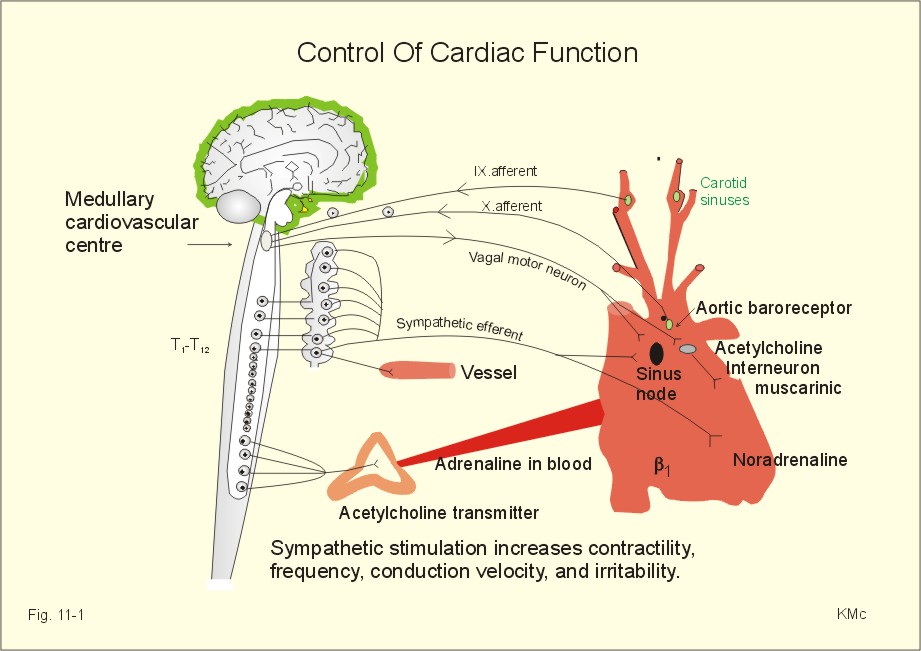
Remember the saying, "The journey between the head and the
heart is one of a thousand miles."? Well, that is what the vagus nerve
does. Literally. It connects the brain and the heart. It is very important for
health and alertness. Recent findings show that you can improve the tone of
that nerve.
"Then there are mental benefits. People with higher vagal
tone tend to be intellectually sparkier, with a better working memory and
ability to focus their attention. Some work even suggests that the low vagal
tone commonly seen in people with chronic fatigue syndrome may account for the
cognitive slowness that can accompany the condition."
The scientist researching this has come up with "loving
kindness meditation" techniques to improve vagal tone, techniques that
remind one of Abdu'l-Baha's teachings against negative thoughts about others,
or even about life itself. As you see below, this is also a teaching of the
Quran.
"Learning loving kindness meditation
improves vagal tone," says Fredrickson. And good vagal tone improves
emotional and social well-being. So an "upward spiral" exists, in
which higher vagal tone promotes greater social connectedness and positive
emotions, which then promotes even higher vagal tone. She calls social connectedness a potent "wellness
behaviour", noting
that social isolation is associated with an increased risk of death comparable
to smoking, drinking too much alcohol, obesity or physical inactivity. If she
is correct, vagal tone is an important player in the mind-body connection, and
loving kindness meditation is a key to improving our mental and physical
well-being, deepening our personal experience, and lengthening our lives."
..."Meanwhile, if you are tempted to think well of others,
there is one thing you should know: improving vagal tone is hardest for people
who have low tone to begin with. But whatever your level, there is hope – and
regular meditation may not even be necessary. Exercise also boosts vagal tone,
although there still isn't enough research to quantify its impacts. Repeated
exposure to "excitative" music may do too. Andy Martens at the
University of Canterbury in Christchurch, New Zealand, has found that hearing
positive feedback about yourself can increase vagal tone, suggesting that
anything that enhances your self-esteem might help. And Kok has unpublished
work showing that just reflecting on positive social experiences during the day
boosts vagal tone."

The health of our vagus nerve also seems to have something to do with genius, the confirmations our efforts get from others, and from the Spirit. The Baha'i writings say:
"The confirmations of the Spirit are all those powers and gifts which some are born with (and which men sometimes call genius), but for which others have to strive with infinite pains. They come to that man or woman who accepts his life with radiant acquiescence."
~ ‘Abdu’l-Bahá
Thursday, August 08, 2013
Socrates and Confucius on Leadership
Thursday,
August 8, 2013
10:20 AM
Research
report
I am still fascinated with my utopia, my Ur world government.
What would be the ideal governance that would prevail there? All my life I have
been building and refining this imagined stepping stone to world government in
my head. Since it has no physical existence, I build it up and tear it down at
the drop of a hat. As soon as a problem crops up I go from raising to razing to
rebuilding from the ground up. The construction changes as my enquiry into the
nature of democracy advances and my questions change. Socrates put one question
perfectly that I wrestle with constantly. Who should rule? His answer covers
all the bases.
"The true kings, the true magistrates,
(...) are not those who wear crowns, those who have been elected by just
anyone, those who have been chosen by lot, nor those who have used force or
fraud, but those who know how to rule." (Xenophon, Memorabilia III, 9,
10).
Here, Socrates lists each of the most important ways of
gaining power: birth or experience (wearing a crown), election (the
characteristic road to leadership in an
oligarchy or meritocracy, but not, contrary to popular misconception,
democracy), sortition (i.e., lottery for public service posts, as in a jury;
this is the real characteristic of democracy, which assumes that all citizens
are equal), of despotism (force) or kleptocracy (fraud). But the only
legitimate path to leadership is, he says, is through demonstrable knowledge.
Rule of those who know how to rule. Call it epistemocracy.
Simple.
Lately, I discovered that this same idea, that power should
go to those who can show they know, was best taken up in China. And by
"best," I mean that they actually invented a way to assure that those
to take high posts in government demonstrate that actually know what they are
doing in a clear, systematic way. That invention is the written civil service
examination. This led to rule by Mandarin. The Mandarins were the first group
of leaders ever who could say with full assurance that they paid their dues,
they showed in an objective manner that they know what they are doing when they
take a post in government.
This is a momentous discovery that, I think, should be taught
in every history class from primary school on up. I am still reeling from this
realization, and I have been reading history all my life.
When you discover something like that, you change your
reading habits. I immediately turned to a book about Confucius that happened to
be sitting on my bookshelves. It is a biography of Confucius written in 1971 by
one Betty Kalen. My question going into it was, how did the teachings of
Confucius lay the groundwork for the invention of written exams? Clearly,
Confucius did not say, "Use written tests if you want to have rule by
Mandarin." But his teachings were a precondition somehow.

Kalen writes that the ultimate ideal of Confucian thinking is
"Ta Ting," a world commonwealth. This, Confucius says, is the
"great principle." In other words, he was a founder of the principle
of universal peace that, the Writings tell us, is the goal of all other Baha'i
principles. UP is the ring that rules them all, as JRR Tolkien might have put
it. Kalen states that at United Nations headquarters in New York there hangs a
plaque of black marble, inscribed in gold in the Chinese calligraphy of Dr. Sun
Yat-sen, the "father of the Chinese revolution." The quotation is
from the Li Chi, the Book of Rites. In other words, it is traditionally
ascribed to Confucius.
"When the Great Principle prevails, the
world is a commonwealth in which rulers are selected according to their wisdom
and ability. Mutual confidence is promoted and good neighbourliness cultivated.
Hence, men do not regard as parents only their own parents, nor do they treat
as children only their own children. Provision is secured for the aged until
death, employment for the able-bodied, and the means for growing up for the
young. Helpless widows and widowers, orphans and the lonely, as well as the
sick and the disabled, are well cared for. Men have their respective
occupations and women their homes. They do not like to see wealth lying idle,
yet they do not keep it for their own gratification. They despise indolence,
yet they do not use their energies for their own benefit. In this way, selfish
schemings are repressed, and robbers, thieves and other lawless men no longer
exist, and there is no need for people to shut their outer doors. This is
called the Great Harmony." (Confucius, In Life and Legend, by Betty Kelen,
Thomas Nelson, Inc., New York, 1971, p. 103-104)
Great Harmony! Sounds a lot like "Most Great
Peace," doesn't it? I just had to see what this plaque, hanging at the UN
in New York, looks like. No, I do not read Chinese, but just the same, I had to
see it. This is surely one of the founding documents of any future world
government. This, surely, is something that every person of Chinese heritage
must be immensely proud. It must be like the US Constitution is for Americans,
the subject of story, song and action movies.
So I did what anybody does who wants to see anything
nowadays, I looked for the plaque of marble, inscribed in gold, on Google
images. Not a trace. As far as I can tell, just a couple of years after Kelen's
book was published, China entered the U.N., and demanded that the plaque be
taken down. What the UN did with it, I have no idea. If you want to see the
quote, in English translation, you have to go to California and see a roadside
statue of Confucius:
I looked into this some more and found that official rulers of
China, including the republic of Sun Yat-sen, the guy who did the calligraphy,
did their best to repress all memory of Confucius. The Communist regime of Mao
especially suppressed Confucius. Until, that is, about ten years ago. Now the
Chinese government is supporting "Confucius societies" in
universities around the world. So, maybe there is hope that China's founding
document will once more find its way into the UN building.
More on my research later.
...
Thursday, August 01, 2013
Phantom and Admission Review
Phantom and Admission, Movie Review
Every Monday is two for one DVD night at our local video
store. Sometimes I pick my movie based on the number of tomatoes it earns on
rottentomatoes.com's "tomato meter". Other times, I do not. Either
the movie did not turn up on my tomato meter radar (I only read the reviews of
movies that make more than 90 percent at rotten tomatoes), or, at the store, I
cannot remember how well it did.

At such times, I have to rely only on the
blurb on the back of the box -- our video store prints it out in large, senior
friendly letters on the back of their boxes. The letters are so large that
sometimes, when I forget my glasses, I can still, with effort, make out what
the blurb has to say about the movie.
Last night, my double feature consisted of Phantom, a
submarine drama, and Admission, which is billed as a light, romcom. Phantom I
could not recall seeing at tomatoes. So I had only this:
"A submarine captain
suffering from mind-altering seizures (Which are identified in the movie as
epilepsy. Why not use the word?) is forced to leave his family when he is
rushed into a classified mission. (As opposed to all the submarine crew who do
not leave their families?) Haunted by his past and challenged by a rogue KGB
group bent on seizing control of the ship's nuclear missile, the fate of
humanity rests in the captain's hands when he discovers he was chosen for the
mission in the belief he would fail."
I picked this film because I do not like to be bored at my
double feature; it looked exiting, an action movie. It worked quite well, the
male lead was impressive and carried it well. It seemed realistic, considering
that the movie, while based on real events, is utter speculation from start to
finish. All we really know is that a Soviet submarine sank in the late 1960's.
That is all historians really can be sure of, so top secret was the mission,
then and now. If everything in the sub happened as in the movie, we would all
owe our lives to this submarine captain who saved civilization from nuclear
annihilation.

It was not hard to lose yourself in the film, so realistic
are the sets and sounds, but you have to get used to hearing supposedly Russian
crewmen speaking American accented English. I thought that they could at least
have pronounced the names in the Russian way. It is jarring to hear the name
"Vladimir" mangled in the American way, instead of the guttural
expletive that Russian mouths spit out. The crew, using an old-even-then diesel
submarine, seem impressively competent. The ending is strange, they seem to
dredge the sub home to Russia, though the ending titles explain that the sub,
or at least its top secret "phantom" cloaking device, remains in
American hands.
Admission is a Tina Fay vehicle that, I recalled, did fairly
well on the Tomato meter. Still, the story of a university admissions officer,
named Portia, no less? How romantic or even interesting can that be? Indeed,
one adolescent character, who is forced to travel the world with his adoptive
father, romanticizes Portia's boring existence.
Not so much boring, actually, as superfluous.
Admissions officers should not even exist. Universities get
to cherry-pick who their students are going to be? Is not that like letting
doctors pick only healthy people to cure? Or hiring cops only for places where
no crime takes place?
Actually, one character, Portia's romantic rival, picks up on
that feeling. She says to Portia something like, "In England our
universities do not use the broad criteria of American colleges. We pick
students only based on marks. For us, it is the gray cells that matter."
Here am I thinking, is that better, or worse? If you have students so smart
that you do not really have to teach them, will that not tempt the school not
to bother about teaching at all?
Imagine a police department that has few criminals to deal
with, and which also is tasked with criminology research. Which is likely to be
emphasized, crime fighting or research? Which enhances the reputation of a
school like Portia's Stanford, teaching or research? If she does her job well
they will not have to worry much about teaching; all the students will teach
themselves. They will enter the elite and give full credit to the brand's
degree.
There should be a name for this sort of movie, ones that bill
themselves as romantic comedies but which are really something else. In this
case, Admission is too humorless to be a comedy, and not serious enough to be a
drama. Call it an "anomie" flick.
In spite of the lead actor's proven amiability and skill, it is
very hard to sympathize with Tina Fey's Portia. She lives with a man for I
forget how many years, then when he leaves her for another woman, she can only
pretend to care about it. She is depressed, but not primarily because of her
relationships. She sees the futility of her work, but does not seek for more.
She does find it useful, though, to pretend she is living a tragedy, to play on the pity that her breakup arouses
in rivals and colleagues, and turn it to her own ends. She is no motherly type, but the only passion that
she shows is for a boy that she thinks is her son. When it turns out that he is
not, really, by then the viewer is past caring.
So lacking in
commitment is Portia that nothing works out for her, and ultimately, she does
not much care. So, why should we?
The feeling you get at the end is a mild sort of fleeting
melancholy. Mild because her anomie is just what she has sown and reaped. In
the same way, failure to even address its job as an institution of learning is
what Stanford seeks and finds. Finally, Portia stands up for a student who
seems actually to need to be taught. She pulls a fast one and gets him
accepted, even at the price of being fired. Ironically, though, this boy is an
autodidact, someone who educated himself. Even more than other applicants, he
does not need to go to school in order to learn. He says that he saw early on
that he had lousy teachers and role models, so he decided to teach himself. The ideal candidate, actually, for a lousy but high
status school. Just what the elite schools seek, someone who requires as little teaching and guidance as possible. Clearly, Portia should not have been fired for picking him, because she was hired to do just this. Anyone
who needs good teaching in order to progress, that is the student that needs to be weeded out.
In a sane world, institutions of learning would never get to
pick the students they teach, any more than police departments can pick the
neighbourhood they patrol, or doctors can weed out sick patients. There would
be a separate admissions body that would assign applicants to a school based on
sortition (that is, a completely random choice of individuals by lottery).
First of all, it would eliminate students who are not capable of higher
education. How long does it take for a computer to sort that out, a split
second?
Then, everyone would be a candidate.
That is, Stanford would be assigned kids that are rich,
middle class and poor, youths with high, middling and low marks, all based on
clear statistical criteria. It would be forced to do its job, teaching.
Education is a long term thing, but it would only take a generation or two
using sortitioning to find out which schools really are elite schools, and
which really do deserve to be at the bottom of the heap. The result would be a less elitist, a more democratic society.
----
Postscript: Not many movie reviews have a postscript, but
this one does. I just read Leo Tolstoy’s assessment of the novels of Guy de
Maupassant, and here he lays out three “conditions of a true artistic
production,” it needs,
1. the correct, that is, the moral, relation of the author to the
subject,
2. the beauty of form, and
3. sincerity, that is, love for what the author describes.
He goes on to point out that when approaching such a work of
art, once it has passed these three tests, is to ask, what does the artist have
to say that is new?

This movie was clearly written by someone very familiar with
the subject matter, that is, the life of an admissions officer. That was new,
for me. But beyond that, the artistic value of this film is its statement that
it is unlikely that correctness, beauty and sincerity are even possible in
today’s moral climate. There is no tragedy in a relationship breaking up that
neither party committed to in the first place. Personal anguish, perhaps, but
no tragedy. Tragedy and drama require more of the individual than the
characters in this film are willing to give. All we can hope for is an
ungainly, unpretty, unfunny comedy.

Sunday, July 28, 2013
Wednesday, July 24, 2013
Commercialism and Obesity
I wrote the following almost exactly a year ago today. It got buried in my notes and only turned up just now. For what it is worth, I am posting it on the Badi' Blog.


Thoughts on my Philosopher's
Café Experience
July-25-12
11:40 AM
For
several years I have been animating discussions about philosophy and many other
topics at Wainfleet Library's "Philosopher's Cafe." Anybody can drop
into the library's meeting room at 6:30 on the second Thursday of the month and
talk about whatever is on their mind. At these meetings I have met people of
diverse interests and backgrounds.
If
I had to name a topic that interests everyone, it would have to be nature, the
environment and the future of the human race. No matter what issue we start out
with, sooner or later we end up examining that in detail. I have found that no
matter what our preconceptions, opinions and desires, deep down this is what we
all want. We long to live a happy, meaningful life. We want a future of
prosperity, not only for ourselves but for our children and grandchildren. The
only question is, how? I believe that philosophy, dialectic and clear reasoning
can help answer that question.
Another
thing I have learned from these monthly encounters is how powerful
commercialism, particularly television advertising, is in shaping not only our
opinions but our belief that we have the power to improve things. No matter
what people think about themselves and the world, there stands an eminence grise behind the thought. All bow down
before this thought, following them around like a black cloud.
"What
does it matter what I think or how persuasive I may be, it does not matter. It
is the advertisers who, at the cost of millions of dollars, are the ones who
are forming public opinion. We are all penniless bystanders in the not-so-free
market of opinion."
Obesity is a major indicator
of how mighty these powers are. An HBO documentary called "The Weight of a
Nation" points this out graphically. They have a video feed of the series freely available on their web site, even in
Canada. Their thesis is that the very survival of America is threatened by an
epidemic of fat. For example, if the world's most powerful nation were faced
with another crisis like World War II, they could not mobilize because two
thirds of their citizens are too obese to qualify to enter the military.
Canadians are not quite that obese, but we are catching up fast.
The second
episode of "Weight of a Nation" talks about the sadly simple measures
that we can all do to lose our "killer fat," and how to keep it off.
As someone not untouched by this problem, I must say that I learned quite a
bit.
But
even if we reduce our weight as individuals, the question remains, what can the
words and opinions of any individual do in the face of the flood of money,
billions of dollars, being spent to promote the downing of cheap, fattening
food? It is true that advertisers respond quickly when the public knows what it
wants and asserts itself firmly. But in order to know what we want, we have to
think about the situation and discuss it with others. That is one of the
functions of philosophy and the philosopher's cafe. Come out in September and
talk all this over with others in a welcoming atmosphere.
...
Sunday, July 14, 2013
Elimination of Corruption

This Trinidadian has a lot to say about how to get rid of corruption. I especially like what he says about the news reporting crime, but ignoring corruption. The latter is white collar crime, but it is ignored when we talk about criminality.
Subscribe to:
Posts (Atom)