Tuesday, August 21, 2007

sex

Sex and happiness

By John Taylor; 2007 August 21

Talking about atheists, we think of them as being for sexual promiscuity and religious types being against it. Not always. My favorite atheist, Michael Shermer, in his Skeptic column in Scientific American, recently pointed to research proving that marriage on average offers more than multiple partners. Talking about happiness, he wrote,

"This habituation to even a multiplicity of wonderfulness is what economists call `declining marginal utility' and married couples call life. But if you think that an array of sexual partners adds to the spice of life, you are mistaken: according to an exhaustive study published in The Social Organization of Sexuality (University of Chicago Press, 1994), married people have more sex than singles -- and more orgasms." (Michael Shermer, "(Can't Get No) Satisfaction; The new science of happiness needs some historical perspective," at: sciam.com)

The fact is that there are huge corporate interests spending billions to persuade us to consume as much as we can, including sexual "spending." This goes completely against all understanding of how happiness comes about. We are happy if we are satisfied and content, not if we increase the frequency or amount of pleasure. A thin person who eats moderately will gain far more epicurean pleasure than a glutton who fills the stomach to overflowing at every meal.

The same thing is true for sex. Take Viagra, for example. In 1999 it was introduced along with a massive publicity campaign. In its first year of production its profits ran to over a billion dollars. That is not chicken feed, even by corporate standards. Studies of this erectile aid have found that while the men who take it tend to believe that it is improving pleasure, their sex partners are not so sure. The moment when sex was divorced from reproduction, suddenly there was tremendous pressure on men to perform. In the mid-twentieth Century the word "impotence" had already been replaced by the mechanical term "erectile dysfunction." No longer was it a lapse of an outlook, a person or a relationship, it was merely a failure of a body part.

Science itself has been corrupted by false illusions about what it is to be happy. Shermer concludes his excellent column on happiness with these words,

"Historian Jennifer Michael Hecht emphasized this point in The Happiness Myth (Harper, 2007). Her deep and thoughtful historical perspective demonstrates just how time- and culture-dependent is all this happiness research. As she writes, `The basic modern assumptions about how to be happy are nonsense.' Take sex. `A century ago, an average man who had not had sex in three years might have felt proud of his health and forbearance, and a woman might have praised herself for the health and happiness benefits of ten years of abstinence.' Most happiness research is based on self-reported data, and Hecht's point is that people a century ago would most likely have answered questions on a happiness survey very differently than they do today. To understand happiness, we need both history and science."

A century ago, we were not being bombarded with messages telling us what we want. Or what will make me happy. Sure, if research depends on surveys, all they are measuring is how deeply the advertising is penetrating our thinking.

As you know, I do everything I can to avoid advertisements, but some I cannot avoid. Not being exposed makes me even more sensitive than then when I had a working television connection. A television advertisement now hits me in the face like a sledgehammer. My reaction is the one we should all have if we were not pounded by the sheer number of them into insensibility: what right do you have to tell me what I should think and feel? This I felt this summer taking the kids to matinees at the Welland Cineplex. Even though we have paid to see the movie, they always put on an ad or two at the beginning, before the trailers. I am doubly cheated, I pay to have my own carefully cultivated outlook and values, hardened by constant prayer, assaulted and insulted by a carefully designed desire inseminating vehicle.

Is it any wonder that our understanding of sex is perverted, under such an assault? We must have sex, and the more the better. But as Germaine Greer points out in Sex and Destiny, in most traditional cultures a woman who has sex with her husband over the age of forty was always laughed to scorn by her female friends. What is the point of having sex at such an advanced age? Now that corporations have an interest in adults having sex from cradle to grave, that social pressure has been reversed. Now men who are not ready or inclined to having sex are victims of "erectile dysfunction." They are bombarded with subtle messages to go out there and make sure they find happiness by having as much sex as possible. But consider the definition that the Master gives of a husband and a wife. Look as long as you want, you will not find the word "sex" mentioned:

"As to thy question concerning the husband and wife, the tie between them, and the children given to them by God, know thou, verily, the husband is one who has sincerely turned unto God, is awakened by the call of the Beauty of El Baha and chants the verses of oneness in the great assemblies. The wife is a being who wishes to be overflowing with and seeks after the attributes of God and His names; and the tie between them is no other than the Word of God." (SW, Vol. 9, p. 85)

Not sex, the Word of God. Here is the rest of this Tablet. Search all you want, you will not find sex mentioned here either.

"Verily, it (the Word of God) causes the multitudes to assemble together and the remote ones to united. Thus the husband and wife are brought into affinity, are united and harmonized, even as though they were one person. Through their mutual union, companionship and love great results are produced in the world, both material and spiritual. The spiritual result is the appearance of divine bounties. The material result is the children who are born in the cradle of the love of God, who are nurtured by the breast of the knowledge of God, are brought up in the bosom of the gift of God and are fostered in the lap of the training of God. Such children are those of whom it was said by Christ: "Verily, they are the children of the Kingdom.” (Id.)


Sunday, August 19, 2007

Forward to Prophesy

Back to the Future with the Impeller and the Witness

By John Taylor; 2007 August 20

Now that Momka is working evenings, sometimes as late as eleven, the kids were staying up later and later to meet her and get a mother's touch for bedtime. Last week it was getting ridiculous, up past midnight, sleeping until almost noon. To help get them back to normal I gave them a propaganda campaign, Ben Franklin's saying, "Early to bed, early to rise, makes a man healthy, wealthy and wise." At the same time I lured our toughest egg, just turned eight-year-old Tomaso, out of bed with a film each morning. The most effective of all was a boxed set of Spielberg’s "Back to the Future" trilogy that I had picked up for a song. After seeing the first movie it was murder keeping him away from the next film in the series all day. I had to keep saying, "I had to wait years to see the next one when they were made back in the Eighties so you can certainly tough it out for one day." As expected, it was very easy to get him up early in the morning to see the next installment. Now he is constantly making time machines out of Lego pieces, and each new contraption comes with its own time-traveling "flux capacitor," just like in the films.

This morning I read an article, intriguingly but rather deceptively named "Memories of the Future, How your mind can slip through time," on the cover of the March 24, 2007 edition of New Scientist magazine. The gist of it is that new brain imaging techniques have found that the brain uses the same neural circuitry to reconstruct past events as it does to imagine future events. Not just similar, but the exact same hardware lights up when we remember as when we plan and anticipate.

We get this new understanding from the unintentional sacrifice of those poor blighters who suffered brain trauma and amnesia. Memory is no longer divided into just short and long term, there are now known to be several kinds of long term memory, broadly divided into semantic (knowledge of facts), episodic (memories of events in our lives) and procedural (knowing how to do something, like play the piano). Each of these has its corollary in our imagination of future events. Endel Tulving of the University of Toronto teased some of this understanding from a patient known as KC., whose loss of episodic memory meant that, hooked up to the new imaging contraptions, Tulving could see that his memory loss wiped out also his ability to see himself in past or future. (Future Recall, Jessica Marshall, New Scientist, 26 March, 2007, p. 37)

Of course Alice in Wonderland learned this when she was told that the only time you can ask for directions is when you know where you want to go, and to distinguish your goal you must remember where you have been. Nonetheless, the author says that this is an important finding because it is known that we spend on average twelve percent of our waking time musing about future events. Our reveries are not wasted time -- as the New Agers and meditation gurus would have us believe -- but are necessary for planning, essential to the examined planning of civilized life. We all, in effect need to spend at least one moment in ten in that place the Spielberg movies call "back to the future."

After reading this article I could not help but think of Baha'u'llah's masterpiece, the Kitab-i-Iqan. The greatness of the Iqan rests in just what this research uncovers. Prophesy is literature concerned with our collective episodic memory, and our future sense. The Iqan therefore addresses our religious memory and, at the same time, our anticipation center, our religious sensibility, the thing that drives us to see ourselves, and put ourselves into, a bright future.

Now I see why the Bab and Baha'u'llah portray the Iqan as the "key" that opens up past prophesy, and why that is significant -- as a former atheist I used to think, who cares about prophesy? It confirms what was written thousands of years ago, so what? Now I see that the same "key" that opens up the past also works on our future, our faculty for planning.

Before this Revelation, religious teaching was all it could be, a vector pointing towards a distant future when, it was vaguely anticipated, an individual would be free to plan. I plainly see: if, as Jesus said, `the truth will set you free,' the fact that freedom has always been so rare and exclusive meant that truth was incomplete, as yet not wholly grasped. There must be a civilization, an order of peace, equality, justice and freedom in order for past and future episodic memory to reflect the whole, un-obscured by prejudice.

The pre-Iqan world was a time of prophesy because the episodic memory of the Adamic cycle was incomplete. Religion ended in prophesy, vague prediction of something big happening sometime way off in an unimaginable future, a future not memorable, since humanity had not written what Kant predicted would one day be called a "cosmopolitan history." There were regional, ethnic and sectarian histories, but nothing universal. A cosmopolitan history would be a unified history of the entire human race, not a part, not apart.

The Iqan is God's gift, a spiritual cosmopolitan history. Without it there would be no way to imagine or plan out future acts of will. It portrays our collective place in the past and at the same time enables us to see and plan our own future within the Plan of God. Thanks to this book, souls from around the world got a vision of the past, the concept we now term "progressive revelation," and that led at the same time to a beatific vision of a better, united future. This double stimulus prompted them -- without indoctrination, on their own initiative -- to give up home and homeland to go wherever the Plan of God beckoned. Thanks to this book, even today believers, even children, are suffering mockery and martyrdom in order to follow what Baha'u'llah in the Epistle to the Son of the Wolf calls the "ban" of God.

The significance of "back to the future" is not just that we use the same mental muscle for reveries about past and future experience. This way of working things out is not just a quirk of brain anatomy; it is a reflection of twin attributes of God, twin attributes that it took Twin Manifestations to pound into our consciousness. The following passage from the Iqan points out that this memory and future faculty in our skulls reflects two attributes, God as Witness (memory) and God as Impeller (anticipation). This I just now uncovered when these musings prompted me to look once more into the Iqan,


"As the commentators of the Qur'an and they that follow the letter thereof misapprehended the inner meaning of the words of God and failed to grasp their essential purpose, they sought to demonstrate that, according to the rules of grammar, whenever the term "idha" (meaning "if" or "when") precedeth the past tense, it invariably hath reference to the future. Later, they were sore perplexed in attempting to explain those verses of the Book wherein that term did not actually occur. Even as He hath revealed:
"And there was a blast on the trumpet, -- lo! it is the threatened Day! And every soul is summoned to a reckoning, -- with him an impeller and a witness." (Qur'an 50:20)
"In explaining this and similar verses, they have in some cases argued that the term "idha" is implied. In other instances, they have idly contended that whereas the Day of Judgment is inevitable, it hath therefore been referred to as an event not of the future but of the past. How vain their sophistry! How grievous their blindness! They refuse to recognize the trumpet-blast which so explicitly in this text was sounded through the revelation of Muhammad.
"They deprive themselves of the regenerating Spirit of God that breathed into it, and foolishly expect to hear the trumpet-sound of the Seraph of God who is but one of His servants! Hath not the Seraph himself, the angel of the Judgment Day, and his like been ordained by Muhammad's own utterance? `Say: What! Will ye give that which is for your good in exchange for that which is evil? Wretched is that which ye have falsely exchanged! Surely ye are a people, evil, in grievous loss.'" (Kitab-i-Iqan, pp. 115-116)


Capitating

Tomaso's Goal, Capitating Sports and How Gratitude and Detachment Permit of Moderation

By John Taylor; 2007 August 19

This summer has got to be the busiest in my whole life. Now that Marie is working evenings, I have the kids on my hands exclusively five nights a week, plus they are around all day. For the first time I am looking forward to the start of school in September. With last week's rain and threats of rain I had another run-in with migraine. Even my last resort, drinking glass after glass of water, did not save me entirely from this attack. Which brought up a disconcerting question, "True, John, you have had fewer than a dozen attacks all year long, but is that because imbibing massive amounts of water is such a sure-fire protection, or could it be just that the climate this year has been the driest on record for at least seventy years?" I have been able to produce reliably and even plan my activities without constant interruptions from attacks under drought conditions, but maybe I am like those neurological patients in the film "Surfacings," brought to normalcy by a drug which, it turns out, works only temporarily. In the end the poor blighters sink back into the haze of mental obscurity. If so, there is nothing I can do about it. Every second of life is precious, no matter what, and I am infinitely grateful to be alive in this Day of God, even if everything is not how I would want it to be.

Tomaso had his final soccer tournament yesterday, two games, one in the morning and one in the afternoon. I found out that the team had in fact scored this season, getting one goal in their third and one in their fourth game; evidently we missed those games. Anyway, they have not scored for so long I felt like promising a loony for the first kid to score a goal. Wanted to say it but did not; I am shy, I guess. I did have a standing promise of a reward for Tomaso, but he has played goalie for half of every game so far, and when he is not in goal usually is put on defense.

This time, even though Tomaso is their most experienced goalie, she put in his place for both games a taller player who had stayed away for the whole season. Worse, he hates playing goal. The other father of a Tommy, Terry, and I normally stay behind the goal posts to catch the missed shots and advise the goalie. There are so many shots on goal that we are kept very busy chasing balls and throwing it back. Terry was a top goalie in both soccer and hockey, and sorely regrets not coaching this year. (During a rare time when we were not chasing missed shots on goal, I mentioned that I saw the film Miracle and that my old hero Tretiak was in it. He said that he was on a Canadian junior team that toured Europe and went to Russia and played the Soviet Red Army Team, with Tretiak in goal. My respect for Terry went way up when I heard that.) I could see why she put this other little guy in goal, as he showed that he can kick several times further than Tomaso. Unfortunately, perhaps to spite Terry's constant admonitions to kick it to the side, he kept kicking it down the middle into a forest of opponents, which cost us several goals each game.

For the first time in a long time, the entire team turned out for this final tournament of this first season of this all-Dunnville league. On the whole the Blues did much better as a result. They were actually getting relieved once in a while and played more vigorously as a result. But it was hopeless. Terry explained how this team was chosen. It seems that the other coaches all got their pick of the best players. Then, after that, there was a spurt of applications by beginners. So they dredged up a new coach at the last minute who got no choice of players and formed the Blue team. Our blues did well, all considered, that Saturday. They only lost five to nothing in the first game, and four to one in the second game. Marie had to go to work at four in the afternoon that day, so at half time of the second game I drove her home. I rushed back, only to find out that I had missed the only goal the Blues got that day. To the immense pride of this Taylor family, it was Tomaso who scored it! I immediately forgave the coach for not putting Tomaso in goal that day.

Terry told me what had happened while I was gone. The Orange team felt safe and pulled their best player from forward to put him into goal. It was only 3 to 0 at that point. Just after the half, the ball made a rare appearance on the other side of the field. Tomaso got his goal, and they suddenly realized they might lose against the worst team in the league. So immediately they pulled their ringer from goal and put him on forward again. Well, at least we put a little fear into them, albeit briefly. And even with their ringer back, we held them to only four or five to one at the end.

Terry is determined to coach next year, and so would I if I had the knowledge he does. Fortunately, as the poet says, `where ignorance is bliss, `tis folly to be wise.'

I look at how this sports system is set up and wonder how my idea of capitation sports might work out. Capitation sports would not just pick out a small elite to `represent' us while we sit back and cheer on their ephemeral improvements. Capitation sports would be sensible about how things really are. It would work with the average physical fitness of an entire neighborhood and pit that standard against improvements made in other neighborhoods of equivalent size and makeup. That way, victory would not depend on how the best do in an athletic contest but mostly on how much the worst improve.

This would be better because of how the human body works. We get a false impression from elite sports, which are backed by powerful commercial interests and exclusive attention from the media. In spite of that, the reality is that the human body does not benefit from taking it to extreme levels of performance. In fact, it is harmed. Studies have found that mortality among top level athletes is higher than those who exercise within the bounds of moderation. True, they are better off than the sedentary, but not by as much as you would expect. In a statistically run sporting system, the aspirations of an entire community would rest largely on improvements by its least athletic. Their hopes would rest in how the most obese and sedentary members make progress. Sure, everybody would have to keep fit in order to win, but those who can contribute most to improved averages would be those who stand in need of exercise more than others.

That is why I focused in on the advice of that wealthy Athenian to Socrates yesterday. He consciously planned his entire lifestyle around keeping himself and his horse fit, ready for increased growth in peacetime, and ready for the strain of war in case of conflict. If neighborhoods thought that way, if they planned homes, buildings and social activities with an optimal lifestyle for all members in mind, and compared their progress with other, similar places, there would be rapid improvement.

Like anything, if capitated fitness were carried to an extreme it would cease to benefit. Just imagine fat and lazy people becoming prized commodities. Just as talent agents presently scout out the best hockey or football players and offer astronomical salaries and other benefits, in a capitation sports system a wealthy neighborhood would be sending scouts to bribe the worst non-jocks in other locations to come to there and start improving their physical condition there. In itself, that would hardly be a bad thing, but once the rewards become substantial you would see the same thing that is ruining professional sports now, what with doping scandals. But instead of elite athletes ruining their bodies with steroids to coax out an edge in performance, people of average fitness would move away, stop exercising and eat like pigs to fatten themselves up. They then would move into the neighborhood that offers them the most blandishments to come there and improve their fitness level. Such behavior would increase mortality as much as doping must do among elite athletes.

A way to get around such problems might be to capitate moderation itself. Anything that can be measured is fair game for capitation, and there would surely be signs that people are carrying competitive fitness improvement too far. One help would be to capitate wealth and ethnic variety as well as physical fitness. That way, individuals would be less desperate for money, would have several independent sources of data and values, and thus would be less inclined to surrender their health at any cost.

Needless to say, religion in its pure form is designed to protect against our natural inclination to go to extremes. Abdu'l-Baha explains the benefits of both gratitude and detachment, how both attitudes work together to protect us from our own weakness, from the seductive illusion that robustness in one aspect of life is the same as strength overall.


"All that has been created is for man who is at the apex of creation and who must be thankful for the divine bestowals, so that through his gratitude he may learn to understand life as a divine benefit. If we hold enmity with life, we are ingrates, for our material and spiritual existence [are] outward evidences of the divine mercy. Therefore we must be happy and pass our time in praises, appreciating all things.
"But there is something else: detachment.
"We can appreciate without attaching ourselves to the things of this world. It sometimes happens that if a man loses his fortune he is so disheartened that he dies or becomes insane. While enjoying the things of this world we must remember that one day we shall have to do without them.
"Attach not thyself to anything unless in it thou seest the reality of God - this is the first step into the court of eternity. The earth[ly] life lasts but a short time, even its benefits are transitory; that which is temporary does not deserve our heart's attachment." (Abdu'l-Baha, Divine Philosophy, 134-135)


Saturday, August 18, 2007

Economist

Health and the Oeconomicus

By John Taylor; 2007 August 18

If you compare the environmental impact of a troglodyte of twenty thousand years ago to that of the average human today, by some estimates the latter inflicts thousands of times more harm than the former. We think of Stone Age technology as inferior but if we truly were more technically advanced than them surely this would be reversed. Our impact on nature would be thousands of times less than in pre-history, not more. The fact is that in spite of our vaunted technical advancement, we live in an excruciatingly uncreative era. Pound for pound, citizen for citizen, community for community, we cannot hold a candle to Ancient Athens, to the Baghdad of Harunu'r-Rashid, or to Renaissance Florence.

Science, electronic communication and rapid transportation have put at our fingertips more knowledge and shared experience than ever before. I believe that if we put our mind to it we could not only live more sustainably than primitive man, but also have a shot at the artistic, literary and creative heights of Athens, Baghdad and Florence.

So the first mission of the world government set up at Terra City, Antarctica would be to design a new infrastructure, an integrated transportation and dwelling network to allow technology to erase our carbon footprint. But carbon footprint reduction surgery is only a beginning. It is the bare minimum of what we can achieve. Its mission beyond the mission would be to establish communities on a sweet point of creative tension between the individual and groups, at the dynamic equilibrium that leads to creative, artistic and cultural efflorescence.

The way to allow every village, town and city, every populated area on earth to make itself into its own Athens, Baghdad or Florence, would be to reset the defaults for the average lifestyle. Only healthy, vital individuals can make for an optimally creative civilization. Only when citizens are trained, with consciousness raised could they remove the prejudice and corruption that make our political organization so ineffective, especially at the local, continental and international levels. With that in mind, consider this Socratic dialog by Xenophon, a friend and student of Socrates. Xenophon suggests that Socrates did not only go around pointing out peoples' logical errors, he did something far more positive and useful; he sought out the successful people of Athens and asked them to share the secrets of their success. Here, Socrates interviews a wealthy and successful householder, who gives him the following important tips for incorporating exercise into daily activities. The lessons he teaches are exactly what we should keep in mind as we redesign the infrastructure of local neighborhoods.


From: Xenophon, Oeconomicus, XI, 10-20, pp. 457-459

"By Hera (I replied), Ischomachus, I cannot say how much your doings take my fancy. How you have contrived, to pack up portably for use-- together at the same time--appliances for health and recipes for strength, exercises for war, and pains to promote your wealth! My admiration is raised at every point. That you do study each of these pursuits in the right way, you are yourself a standing proof. Your look of heaven-sent health and general robustness we note with our eyes, while our ears have heard your reputation as a first-rate horseman and the wealthiest of men..."

Socrates: Please ... tell me how you take care of your health and your strength, how you make it possible to come through war with safety and honour...

Well, Socrates, replied Ischomachus, `all these things hang together, so far as I can see. For if a man has plenty to eat, and works off the effects properly, I take it that he insures his health and adds to his strength. By training himself in the arts of war he is more qualified to save himself honourably, and by due diligence and avoidance of loose habits, he is more likely to increase his estate.

Socrates: ... You tell me that by labouring to his full strength, working off his ill humours, by expending care, by practice and training, a man may hope more fully to secure life's blessings. So I take your meaning. But now I fain would learn of you some details.

What particular toil do you impose on yourself in order to secure good health and strength? After what particular manner do you practise the arts of war? How do you take pains to create a surplus which will enable you to benefit your friends and to gratify the state?

Why then (Ischomachus replied), my habit is to rise from bed betimes, when I may still expect to find at home this, that, or the other friend, whom I may wish to see. Then, if anything has to be done in town, I set off to transact the business and make that my walk; or, if there is no business to do in town, my serving-boy leads my horse to the farm; I follow, and so make the country-road my walk, which suits my purpose quite as well, or better, Socrates, perhaps, than pacing up and down the colonnade. Then when I have reached the farm, where mayhap some of my men are planting trees, or breaking fallow, sowing or getting in the crops, I inspect their various labours with an eye to every detail, and, whenever I can improve upon the present system, I introduce reform.

After this, as a rule, I mount my horse and take a canter. I put him through his paces, suiting these, as far as possible, to those inevitable in war -- in other words, I avoid neither steep slope nor sheer incline, neither trench nor runnel, only giving my utmost heed the while so as not to lame my horse while exercising him. When that is over, the boy gives the horse a roll, and leads him homewards, taking at the same time from the country to town whatever we may chance to need. Meanwhile I am off for home, partly walking, partly running, and having reached home I take a bath and give myself a rub; and then I breakfast--a repast which leaves me neither empty nor replete, and will suffice to last me through the day.


Friday, August 17, 2007

Prejudice I

Integration and Prejudice, A Thought Experiment
First of a series on the elimination of prejudice.


By John Taylor; 2007 August 17


An article appeared a few months ago that has prompted me to take another look at the Baha'i principle of elimination of prejudice. It is called, "Are we born prejudiced?" (Mark Buchanan, New Scientist, 17 March 2007, p. 40), and sums up discoveries about the mechanisms of prejudice by various branches of science, including genetic and behavioral research, as well as mathematical game theory that have been made over the past few decades. Here is its opening paragraph,

"In 1992, during the war between Serbia and Croatia, The Washington Post ran an interview with a Croatian farmer named Adem, who had a horrific story to tell. Over the previous year, Adem said, discourse between local Serbs and Croats had deteriorated, as individual identities dissolved into a menacing fog of "us" versus "them". Then group animosity turned into something far worse. Serbs from a neighbouring village abruptly rounded up 35 men from Adem's village and slit their throats. The summer before, the killers had helped their victims harvest their crops."

Prejudice is a spark to tinder, it catches flame where you least expect it; it converts ill thoughts into violence like lightning. Its blood spilling is out of control before you know it. My favorite example is the Second World War. But even quicker and in some ways more hideously shocking was the massive bloodletting in Rwanda. The atrocities there are mentioned only in passing in this article.

Lately I watched the film "Hotel Rwanda," and I highly recommend it. I had drawn back from seeing the film when it first came out for the same reason that I avoid most heavy dramas. Life is depressing enough without rubbing my nose in its excrement. The killing of millions of people by machetes I do not consider to be a highlight of human history.

What finally prompted me to grit my teeth and watch it was when I ran across a newspaper advice column for bosses and managers recommending the central figure of this movie as an exemplar of the finest leadership skills in dire adversity. Sure enough when I did see this filmed version of events that really happened, I was not only inspired but absolutely blown away by the integrity of that ordinary hotel manager changed by extraordinary events into a moral superman. Here is an intelligent guy, himself a victim of racial prejudice, who goes out on a limb for his neighbors. He risks everything in order to do the right thing. By the grace of God he somehow manages to survive. Run through those events again and 999 times out of a thousand he would be just another victim, a nameless martyr to injustice. Providence saved him in order to demonstrate to the likes of me what moral nebbishes we really are. Put me into that situation and you would see me running off flailing my arms, screaming hysterically into the sunset in the first reel.

The prejudice article then mentions the kafuffle caused by racist comments against a Bollywood starlet on the British reality television show "Big Brother." This,

"provoked thousands of shocked viewers to write letters of complaint. There was a media frenzy. Questions were asked in Parliament. Even the Chancellor of the Exchequer, Gordon Brown, who happened to be on a visit to India, felt he had to comment on the affair."

Hardly an atrocity on the order of WWII or Rwanda, but this is exactly how both of those massive wrongs began, with casual words of hate uttered by ordinary people about others of a different color, religion, tribe or other group allegiance. At least people are sensitive today as to what a dire threat racist comments pose to the survival of an open society. The more freedom we have the more people of different backgrounds will rub elbows, and the more dangerous prejudice will become.

But what do you expect to hear when you put ordinary people into a room with someone of a different race? What can you expect when our schools avidly pump kids heads full of ephemeral facts while neglecting to teach an iota of pride in our common humanity, or to instill in them a sense of what an honor it is to be a creation of God and a member of the human race? Since we are talking about the emerald isle, I was reminded of a comment that Bill Clinton made in a speech in England not long after 9-11. He said,

"The central reality of the twenty-first century world, as the spread of terrorism and the vulnerability of the United States to it demonstrate, is that our era is globally interdependent but far from integrated." (The Observer, September 8, 2002, http://www.observer.co.uk/comment/story/0,6903,788135,00.html)

Integration is the key word here. The only way ever to get a handle on prejudice would be to integrate knowledge by agreeing upon a universal core curriculum and teaching it everywhere, not only in schools but everywhere. This core would establish a body of common knowledge that every human child, no matter who they are or where they live, must learn.

Think of it like this.

Imagine me in a television documentary, like my hero, Jacob Bronowski in The Ascent of Man. I am standing by one of those restaurant play places where toddlers jump into a pit and wade around up to their necks in a pile of multi-colored plastic balls. I jump in holding what looks like a suitcase in my hand. I slowly, clumsily wade, knee deep in balls, out to the center of the pit. I say,

"How would a core body of knowledge help integrate things for the human race? Well, imagine that these balls are you and me. Each ball is a person. Not only that, imagine that every group we ever get involved in throughout our lives is also a ball. Your school, your workplace, your special interest groups, your circle of friends, each one is a ball. I am standing in an infinity of balls here. Right now each ball is separate, weak, non-integrated. If I kick them, they act like a liquid, except that they do not splash, nor am I ever likely to get wet. I can move a ball wherever I please. I can take this ball, and throw it over there. Anybody can come in here and put any ball alongside any other balls in order to suit his own purposes, be they good or evil. Anybody else can come in five minutes later and move my balls somewhere else, ruining whatever it was that I was trying to do with my arrangement. But watch what happens when I do this..."

I then pull a string on the object I am holding. It turns out that it was not a suitcase but an inflatable life raft. It explodes into a huge blow up boat, filling the entire space of the play area. I am violently pushed against a wall and the floor. I cannot move a muscle, so tight is the fit between the skin of the life raft and the wall. I continue,

"Now, if I try to move one of these balls... Ugh ... I cannot. They are rock solid. Nor can I move myself very well... Here we can get a picture of the effect that a little common knowledge would have on our world. Note that the life raft is only touching these little spheres at one small point, but consider what an effect that touch has! Now they are a solid mass, immovable, steady. Nobody is going to manipulate them now because the skin of that boat is keeping them tight against it. Now they are in tension with each other too."

That is how a world curriculum would integrate the human race.


Thursday, August 16, 2007

Atheism

Atheism and Some Broken Sticks

By John Taylor; 2007 August 16


Atheism

Most of my readers know that I was an atheist before I encountered the Baha'i Faith. Because of this personal experience, I feel a special mission to teach the Baha'i Faith to atheists.

I am not aiming at a small congregation. If you look at the statistics and count the spectrum of non-religiosity from lapsed believer to agnostic to atheist as a single religion then this "faith" usually comes in around third or fourth in most developed countries in numbers of adherents. In Western lands there are more atheists than Baptists, Muslims, or just about any other religious denomination you can shake a stick at. Only Catholicism and a couple of others regularly come in before atheism.

There is no atheist pope, so my main contact with this persuasion is the Scientific American "Skeptic" column, especially the installment in the latest issue, called "Rational Atheism," (Scientific American, September 2007, pp. 44-46), where Michael Shermer writes,

"Since the turn of the millennium, a new militancy has arisen among religious skeptics in response to three threats to science and freedom: (1) attacks against evolution education and stem cell research; (2) breaks in the barrier separating church and state leading to political preferences for some faiths over others; and (3) fundamentalist terrorism here and abroad."

Shermer goes on to point out that four atheist books have recently hit the top of the New York Times bestseller list, "Sam Harris's Letter to a Christian Nation (Knopf, 2006), Daniel Dennett's Breaking the Spell (Viking, 2006), Christopher Hitchens's God Is Not Great (Hachette Book Group, 2007) and Richard Dawkins's The God Delusion (Houghton Miffl in, 2006)" He does not say so, but Shermer seems to be responding to some high profile criticisms in the press of these bestsellers, ripostes saying essentially that their authors seem awfully adamant about something that they claim to know nothing about.

His thesis in this article is that atheists should try to be less aggressive and negative. They should raise their consciousness and try to apply the Golden Rule. They should try not to define themselves negatively. That must be a tall order, since the very word "atheist" means "without" or "against" the belief in God. Some try to get around that by calling themselves humanists, but that does not distinguish them from believers, who, if they are at all sincere in their faith, are humanists too.

Shermer also points out that both believers and atheists should respect the right and freedom of others to believe what they choose. He concludes with these words, "Rational atheism values the truths of science and the power of reason, but the principle of freedom stands above both science and religion." In this sense, believers in God have to agree with that, for freedom is faith's promise. As Jesus said, "the truth shall set you free." The spirit of God is as free as the wind,

"Now the Lord is that Spirit: and where the Spirit of the Lord is, there is liberty." (2 Cor 3:17, KJV)


Some Broken Sticks

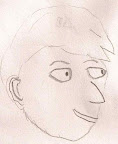
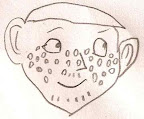
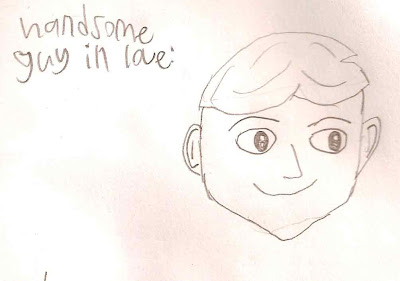
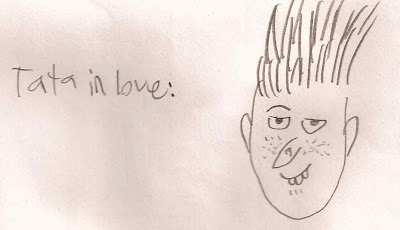
For those who are on the Badi' List and not my blog, I just posted on the Badi' Blog (badiblog.blogspot.com) some cartoons Silvie sketched this evening of her impressions of, one, a handsome guy in college, two, a not-so-handsome college guy, and three, myself during my college days. Similarly, she draws a picture of a handsome guy in love, a not-so-handsome guy in love, and Tata (Daddy) in love. Like her mother, she has a remarkable natural talent for cartooning. I cannot but envy them.

During our evening prayers tonight Silvie hit me with a mini-Socratic dialog. She asked me,

"What would you say to a person who said that they love somebody more than God?"

That was a tough one, but before I could open my mouth, she supplied the answer to her own question.

"If they told you that you should just tell them that saying that is like saying that you love more than love, since God is love."

I praised her for that insight, saying that if she continues like that she will become a philosopher. Tomaso interjected with a rather obscure reference to one of his favorite films of late, National Monument,

"Yeah, loving something more than God would be like destroying the Lincoln Memorial statue!"

Yes, yes, exactly. Later I realized he was thinking of a point in the film where a character says that stealing the Declaration of Independence would be an atrocity, on the scale of taking a national monument, like the Lincoln Memorial.

Anyway, I find sometimes I need a "jump-start," or a priming of the pump, before I start into my prayers, so I have been taking advantage of some Persian prayers available on Youtube. They are wonderfully effective for priming the soul for prayer, even though, in my opinion, you have to understand the words for it to count as prayer itself. In any case, the following is a Persian Baha'i prayer chanted by a male voice.

A comment pleads for the words to the prayer, "even if they are in Dari." If any of my readers can identify it, post the words there, and let me know about it too.

http://www.youtube.com/watch?v=JnLZ1ufk1UQ

The following is titled, "Kalamat-e Maknooneh Baha’i Iran music," chanted by Zahrod Mojgani, with Mohandes Somebody on violin. He plays the violin in a strange, Persian way, that is not unpleasing, and she both reads and chants what are, I believe, the third Persian Hidden Word, and the forty eighth.

http://www.youtube.com/watch?v=uxqRYpg3NOE&mode=related&search=

It is not only spiritually refreshing to listen to this, but it also is a good way to pick up some Farsi vocabulary. Here, for your convenience, is the English translation of these two verses.

PHW3, O FRIEND! In the garden of thy heart plant naught but the rose of love, and from the nightingale of affection and desire loosen not thy hold. Treasure the companionship of the righteous and eschew all fellowship with the ungodly.

PHW48, O BRETHREN! Be forbearing one with another and set not your affections on things below. Pride not yourselves in your glory, and be not ashamed of abasement. By My beauty! I have created all things from dust, and to dust will I return them again.

Regular contributor Jean sends the following link to the text of Gordon Brown's recent speech to the UN, which is, she says,

"about world unity and the responsibility of people in rich countries to help their brethren in poor countries. One of my colleagues left a printout on the table in the break room. I skimmed it while waiting for a meeting, and was delighted to see many references to our cherished Baha'i principles."

http://www.labour.org/uk/gbunitednations

Here is another Youtube discovery. I did a search on that site for my life's work, the Baha'i principles, and was surprised to find a little production on that subject by a relatively local group for me, the Niagara pre-youth class. The pre-youth give little summaries of the principles, and somebody, who it is I would like to know, uses a fair bit of editing skill to put it all together. Check it out at,

http://www.youtube.com/watch?v=LphNOslJqwo

I would love to post something on Youtube with a little more substance on the principles, but until I do this tidbit will do.


sketch

Handsome guy in College


Not so handsome guy in college


Tata in College


Handsome guy in love


Not so handsome guy in love


Tata in Love

Wednesday, August 15, 2007

My Ignorance

Blue's Blues and My Own Ignorance

By John Taylor; 2007 August 15

I have not mentioned eight-year-old Tomaso's soccer games this year, in spite of the disproportionate amount of my time spent there, because the subject is painful. Fortunately, ignorance is bliss. I know next to nothing about soccer.

My career as a soccer player was as ephemeral as any player in history. In High School I was heavily committed to Judo, and the only team sport that appealed to me was soccer. I like using my feet, not my hands, for some reason. In Grade Ten I tried out for the High School Soccer team. "What position do you want to play?" asked the coach. Defenseman, I replied. "Go stand over there, we will have a practice game." So I stood there, and the ball stayed on the other side of the field for the whole scrimmage. I never came near it. When it was over, the coach came up to me and said, "Sorry, you did not make the team." So that was it, my soccer career, indeed my entire experience with team sports, was over.

But even for someone who knows as little as I do about soccer, I cannot help but notice how badly things are going for Tomaso's team. The score at the end of last night's game, for instance, was Whites 10, Blues 0. Tomaso's Blue team have not -- as far as I have seen -- scored a goal all year. Tomaso plays goalie for the first half, and usually defenseman for the second half. I keep telling him that he is fortunate as goalie to be getting so much practice. The other teams' goalies have got to stand around doing nothing for the whole time. The boredom must be terrible. He has more experience in one game than they get all year. This is small consolation, though, and every time I have an awful time persuading him to get dressed and come out to the game.

For Tomaso the only bright spot is his friendship with Tommy. They can talk during half time, and after the game Tomaso always goes over to Tommy's house where they have a big dog named Indiana, a powerful video game machine, and other amusements.

I strongly feel what a blessing my ignorance is as I stand by Tommy's parents, Cathy and Terry. They are cursed, knowing how things could and should be out there. Cathy is an experienced coach for a girl's league in Toronto, and Terry only five years ago was a goalie in an adult soccer league. He is my height but stocky, built like a tank; he was also a top bicyclist and a player in the OHL. I do not know if the OHL is a semi-pro league but I have heard of them, so they must be pretty high up there. This being Canada, I do not expect that you get onto one of their teams by raising your hand and saying, "Sure, I'll play."

Their Tommy, like mine, is no doubt also sorely discouraged by the humiliating defeats the blues are suffering. He looks completely lost, standing forlorn, looking down at his feet searching for bugs, or gazing up at the clouds, or over at the green forest nearby, anywhere but at the ball. When he can, he chats with Tomaso. On defense he would be very happy if the ball stayed on the other side of the pitch. Unfortunately, this does not happen very often with this team. Poor Terry, his father, was tearing out his hair last night. He contrasts Tommy's fecklessness with his own younger days in sport.

"When I was his age you could not keep me away from the ball or the puck. My coaches tried as long as they could to get me to play a position but in the end they just gave up and told me to just go after the ball. So I did, and I did not disappoint."

At one point I mentioned to Cathy how little I know about soccer, and she said, Oh, you should go onto such and such a league's website, they have a whole deal explaining the rules, the techniques, what parents can do to help out their young athletes, and on and on. I drew back in horror. That is the last thing I want to do. I enjoy my ignorance. I witness the frustration that Terry and Cathy go through every game and there is no way I am going to suffer that too. As Anatole France said, "A person is never happy except at the price of some ignorance." I cannot say that I am happy, but at least my ignorance puts me in less agony than otherwise.

Their coach is, as they say, an ordinary soccer mom, a mother of one of the girls on the team. Myself, I see nothing wrong with how she is running things. But, then again, I am ignorant. I did notice right away that she does not seem to have the leadership skills of the other coaches, most of whom have several other adults standing around the bench helping them. "Are they assistant coaches?" I once asked Cathy. No, they are just parents helping out.

Early on, the Blue coach missed a game. It looked like the match would be cancelled, but then suddenly all the other parents jumped in and got involved. Cathy coached the team, and one father even stood behind the goal offering what seemed to me to be very sage and much needed advice to the goalie. I wish I could say that Blue won that game, or even scored a goal. No, but the score was less shameful, at least, and the kids seemed to learn more and felt less crestfallen, supported by all those parents.

Last night the members of the Blue team did not turn out in force. Who can blame them? Just before the game, I arrived to find the other Tommy sitting by, head in hand, with only three players on the pitch. It turned out that he had ridden to the game on his father's bike, and then a shoe turned up missing. Terry had to bike home and get the shoe. So, with Tomaso there, the Blues had to play a man short to start off with, until Terry got back with the shoe. Meanwhile the White team, basking in success, had twice as many players at their bench. This meant that they got rest periods, while the Blues had to play unrelieved, so called "ironman" soccer.

Whenever there was a Blue throw-in, Terry would shout, "Down the line!" What does that mean?, I inquired. It seems that the Blue players were on the wrong side. So I translated, shouting, "Go onto the other side!" Whenever the Whites scored a goal, Terry crinkled up in frustration, saying that they were lining up wrong. Um, maybe there are different rules for these little guys, I speculated. No, no, no. This coach gets what she deserves... I wondered how the other teams line up after a goal has been scored on them. Ruefully, I realized that this has not happened yet because the Blues have never scored a goal, and probably never will this season. Three more games to go. Only three more games.

At one point, the other Tommy came across the field, shouting that he had forgotten his water bottle. Terry winded back and tried to slide it across the pitch to him. The bottle tumbled, burst and splashed most of the liquid out before it got to Tommy. I did not understand what had happened. It seems that Terry had forgotten where he was; this was not hockey, you cannot slide a bottle across grass the way you can across ice.

That kind of thing happens a lot here, I notice. This is Canada. Hockey terminology creeps into the mouths of coaches, often to the great mirth of the parents sitting in deck chairs on the other side of the rink, I mean the pitch. Last night, for example, even the referee told the other Blue goalie, "You cannot pick up the ball when you are outside of the crease." She meant of course the goalie's something or other, another term. Not the crease. If I were not so ignorant I could tell you what the correct term is. There was a goal kick against this offending goalie, and of course the referee placed the ball incorrectly. Fortunately, the score was already so lopsided it made no difference.

I tried to be encouraging to the Blues, and not to criticize the coach. Terry tried too, and it was much harder for him. One time I did slip up, though. At half time, she sent a player (it was her own daughter, I realized later) to go pick up the team treats from the kiosk on the other side of the huge soccer facility. "Hmm," I commented to Terry,

"If this were any other coach I think she would have sent a parent on this errand, rather than tiring out one of her own players to run that long distance during half time."

I regretted saying that later. When I got home, Marie told me why the coach had missed that game earlier in the season. It seems that she is battling with cancer and had to undergo chemotherapy that day. Good excuse. My mother died of cancer, and they must have made the chemotherapy of today a lot less onerous than back in the late 1970's when Mom underwent it. This casts the Blue blues in an entirely different light. As Desdemona said, "O heavy ignorance! thou praisest the worst best." My ignorance is worse, it praises the best worst.


Tuesday, August 14, 2007

God Loves Children

Agriculture and Love of Children

By John Taylor; 2007 August 14

A Baha'i music producer in Los Angeles was recently quoted in the press as saying about his latest rap album, "I wanted to put out a recording that I could sit down and listen to with Abdu'l-Baha." This idea intrigued me. Surely this is a thought that we could all benefit from thinking in the morning, before we start into our work for the day. We could ask ourselves, "Is what I am going to produce today something that I would be proud and happy to show to Abdu'l-Baha?" Or, even more, imagine sitting next to the Master as you work, and then having Him show the results to you.

I was delighted when I came across the work of Jan Amos Comenius. He had a love for young children that you rarely see today. Like Abdu'l-Baha, he understood how important it is to educate them, and how blessed the teachers are. He wrote,

"(That) children ought to be dearer to parents than gold and silver, than pearls and gems, may be discovered from a comparison between both gifts of God; for ... gold and silver are fleeting and transitory; children an immortal inheritance." (Jan Amos Comenius)

Yes! Did not Baha'u'llah address virtually every one of the Hidden Words to the "son of" one of the virtues of God? Did not Baha'u'llah will all of creation to us, and reserve only our most childlike part, the human heart, for His own exclusive use? As soon as I saw it, I knew I had to share the first couple of pages of Comenius's "School of Infancy, written in 1631. The title of the first chapter says it all, "Children, God's Most Precious Gift, and an Inestimable Treasure, Claim Our Most Vigilant Attention." Comenius writes,

That children are a priceless treasure God testifies, saying:

"Lo, children are the heritage of the Lord: the fruit of the womb His reward; as arrows in the hand, so are children." (Ps 127:3-4)

David declares to be happy to whom God confers children. The same is also evident from this, that God wishing to testify of  His love towards us, calls us children -- as if there were no more excellent name by which to commend us.  Moreover He is very greatly incensed against those who deliver their children to Moloch.

It is also worthy of our most serious consideration that God in respect of the children of even idolatrous parents calls them children born to Him, thus indicating that they are born not for ourselves but for God, and as God's offspring they claim our most profound respect. Hence in Malachi, children are called the seed of God, whence arises the offspring of God. For this reason the eternal son of God when manifested in the flesh not only willed to become the participator of the nature of children but likewise deemed children a pleasure and a delight. Taking them in his arms as little brothers and sisters He carried them about and kissed them and blessed them.

Not only this but he also uttered a severe threat against anyone who would offend them even in the least degree, commanding them to be respected as Himself and condemning with the severest penalties any who offended even the smallest of them.

Should anyone wish to inquire why He so delighted with little children and so strictly enjoined upon us such respectful attention to them, many reasons may be ascertained. And first, if at present the little ones seem unimportant to you regard, them not as they now are but as, in accordance with the intention of God, they may and ought to be. You will see them not only as the future inhabitants of the world and possessors of the earth, and God's vicars among His creatures when we depart from this life, but also equally participators with us in the heritage of Christ, a royal priesthood, a chosen people, associates of angels, judges of devils, the delight of heaven, the terror of hell, -- heirs of the most excellent dignities throughout all the ages of eternity. What can be imagined more excellent than this?

Phillip Melanchthon, of pious memory, having upon one occasion entered a common school, looked upon the pupils therein assembled, and began his address to them in these words,

"Hail reverend pastors, doctors, licentiates, superintendents! Hail, most noble, most prudent, most learned lords, consuls, praetors, judges, prefects, chancellors, secretaries, magistrates, professors, etc."

When some of the bystanders received these words with a smile, he replied,

"I am not jesting, my speech is serious, for I look on these little boys not as they are now but with a view to the purpose in the divine mind, on account of which they are delivered to us for instruction. For assuredly some such will come forth from among the number, although there may be an intermixture of chaff among them, as there is among wheat."

Such was the animated speech of this most prudent man. But why should not we with equal confidence declare, in respect of all children of Christian parents, those glorious things which have been mentioned above? Since Christ, the promulgator of the eternal secrets of God, has pronounced that, of such are the kingdom of heaven.

I was thinking of the sage words of Comenius and how close to God our children are when I read an article in Macleans called, "Please refrain from procreating; Would a world without humans be a happier place? Some think so." (Brian Bethune, Macleans, August 6, 2007, p. 48) This writer asks whether our planet might not be in crisis because,

"... our activities now threaten our survival, or because the weight of humanity -- all 6.5 billion planet-eating, carbon-spewing individuals -- lies too heavily upon the rest of what was once known as creation? Those who express the latter view are often dismissed, sometimes maliciously, as being anti-human, madmen who regard the fate of Amazonian butterflies or Arctic bears as having the same moral value as human life. Mostly such accusations are baseless -- you don't have to hate humanity to value the rest of nature -- but there are, in fact, a lot of people who think the most useful thing humanity could do is disappear, in whole or in part."

That this entire train of thought is being seriously entertained is surely a sign of rejection of the One who pleads with us to "choose life." The result of refusal is a life-hating, child hating culture, or at the very least a child unfriendly one. Iniquity, crime and immorality breed from the failure of religion to persuade us of the value of life. The Macleans article mentions a particularly twisted manifestation of anti-religious opinion wrapped up in the trappings of a religion,

"The Church of Euthanasia, for one, is proud to trumpet its four `pillars': abortion, suicide, cannibalism and sodomy. (By the last it means merely whatever form of non-procreational sex appeals to you.) The black humour carries through its website guide to butchering a human carcass, which comes complete with -- in case anyone's still missing the joke -- a recipe for barbecue sauce."

The article then talks about the euthanasia movement, which holds that the best thing we can do for the earth and the environment is to gently go into that good night by killing ourselves.

The most serious argument that these life and child haters put forward is that the earth cannot contain billions and billions of human. Such Malthusian argumentation is not entirely without justification. Surely, to love children means not only loving the children we have but also their children, and their children after that. Our love will only help, then, as long the present population can be sustained on a long term basis. Without moderation, nothing ain't worth nothing. One proposal that this article mentions is to make it obligatory to limit the numbers of new children by instituting a universal "one woman, one child" policy.

"The math suddenly turns positive. If a gender-neutral one-child policy began tomorrow, our numbers at mid-century, currently projected to rise to nine billion, would drop to 4.5 billion. By 2075, we would have reduced our presence by almost half, down to 3.4 billion, and "our impact by much more, because so much of what we do is magnified by chain reactions we set off through the ecosystem."

Using this arbitrary limit to family size, one that has been enforced in China for some decades already, it is estimated that by 2100 there would be only 1.6 billion inhabitants of earth.

But is such a reversal of population growth necessary and desirable? Shoghi Effendi, according to pilgrims' notes, was confident that our problems feeding the masses would one day be solved. Needless to say, the present "green revolution, with its genetic toying and wholesale dumping of petroleum based fertilizers on crops is not a sustainable solution.

The August issue of Scientific American has an important article on how food supplies may be vastly increased while at the same time reducing the environmental footprint of agriculture to less than nothing, in fact, to a beneficial influence on the land. It is about perennial grains, a missing genetic link in food crops that we missed about ten thousand years ago. The article says, in part, that it has been found,

"In a century-long study of factors affecting soil erosion, timothy grass, a perennial hay crop, proved roughly 54 times more effective in maintaining topsoil than annual crops did. Scientists have also documented a fivefold reduction in water loss and a 35-fold reduction in nitrate loss from soil planted with alfalfa and mixed perennial grasses as compared with soil under corn and soybeans."

This is an extremely important article. If we had any sense at all of our survival, of hope for the future, of love for children, we would be spending billions jumpstarting this line of research. This should be the first priority of all sane public policy.


Monday, August 13, 2007

Printalk #9

Bulletproofing Fundamentalism; the Master's Ninth Principle Talk

By John Taylor; 2007 August 13

I have been studying Beyond Bullet Points, by Cliff Atkinson, a modern rhetoric text by the intellectual bulldog that Microsoft itself chose to save the reputation of one of their main moneymakers, PowerPoint. What happened was this: the default setup of PowerPoint all but forces speakers to use bullet points. That would be the equivalent of a novelist using a pre-draft outline for the final printed version of a novel. Nobody would read outlines of novels rather than novels because content would obscure form. As it is, the average PowerPoint presentation is ridden with point form raw data that frustrates and confuses audiences everywhere; they end up calling for Bill Gates' blood. Hence Beyond Bullet Points.

Atkinson is quite clear that the technique he uses is based on Aristotle. Unfortunately he points to the wrong work, the Poetics -- instead of the Rhetoric -- which indicates that he may not have done the research himself. Whoever his researcher is, though, he or she distills the method brilliantly, and seems very faithful to the Rhetoric, which is obscure, dense and totally unusable in the form that has been passed down to us. Believe me, Aristotle's style makes bullet points look clear and easy.

Anyway, as Atkinson points out, Aristotle's methods have been refined by screenwriters over the past century. They have become very clever at applying rapid visual cues to establish W5, who, what, where, when and why, in the first few seconds of a movie. Audiences expect the same high standard from speakers. So Atkinson shows how to tweak the default setup of PowerPoint to make it a help rather than a hindrance. Why the whole PowerPoint program has not been revamped around this schema I do not know -- maybe it is, in the new version for Vista. Anyway, the main lesson from Beyond Bullet points is to set up a storytelling operation, not a bullet ridden outline for a skeleton of a talk.

What I thought I would do today, rather than regurgitating Atkinson's theory in a vacuum, would be to apply it to a living example. I chose what is indeed for Baha'is the ultimate example, an address by our perfect Exemplar. I chose a talk He gave in Montreal, His second recorded public talk in a church in Montreal, given at St. James Methodist on the 5th of September, 1912. This is the ninth principle talk given in North America (tenth, if you count the undocumented Lake Mohonk Conference addresses, at least on of which is a "printalk."). I chose this second talk because a couple of years ago I examined the first Montreal church talk in detail on this blog.

I will go over the first paragraph or two of this second talk asking how the Master's method conforms to and indeed goes beyond the Aristotelian Beyond Bullet Points structure. These cover act one of the screenplay format Atkinson recommends. Act one's goal is emotional, to appeal to the feelings of the audience. Their question is: what are we doing here? Act two appeals to reason, how will we fulfill our reason for being here?, and the third and final act combines the two, emotion and reason, in a fulfilling resolution.

So, without further ado, here are the first couple of sentences of the St. James talk, Act one, scene one:

"Praise be to God! It is with a deep realization of happiness that I am present here this evening, for I am looking upon the faces of those who are earnest in their search for reality and who sincerely long to attain knowledge of truth."

Here, by starting off with "praised be God," the Master right away answers the first question of any story, the question always foremost in the mind of an audience, "Who?," "Who are you going to be talking about today?" "Who are we, in relation to that person?" Atkinson's scheme only discusses two possible who's, the first being the main protagonist, the audience, and the second, supporting character, being you, the speaker. Unlike Atkinson, here the first character mentioned is God, so God is the main protagonist, and the "activity" or qualification of God is, from our human viewpoint, is praise. Abdu'l-Baha, the "servant of the servants," makes it clear from the start that the audience is not the main protagonist but they are rather only supporting characters of the Supreme Protagonist.

Since the main character, then, is the Creator, the faces the Master is looking at are those of seekers after Him. His listeners are all on a special quest. This answers the next question that every movie, storyteller or speaker must deal with right away: where? "Where are we?" "What are we doing here?" We are knights in quest of ... of what? "What," then, is the next question. What is our holy grail? Truth and reality. God has set us on a quest to discover the reality of the situation. They are "earnest in their search for reality." Thus of the many possible types of story, the Master has chosen a plot line that Atkinson calls, "The Great Dream," whose summary is: "If we can only see our possibility, we can make it our reality."

Having in two sentences established who and what humans are in quest of, Abdu'l-Baha then goes on to the big question, why? Why are we here? This means specifying the implements that we as humans have at hand in our quest for reality.

"God has created man and endowed him with the power of reason whereby he may arrive at valid conclusions."

This sentence sets the audience up for the next two requirements of act one of any story, a crisis and a resolution. The crisis brings us down to the here and now, what we are doing sitting in these seats listening to this speaker. Specifically, He asks us, what happens if we humans do not seek out reality?

"Therefore, man must endeavor in all things to investigate the fundamental reality."

The resolution to the problem posed is to find "the fundamental reality." In other words, good fundamentalism, not the bad kind (which of course is concerned with unexamined dogma and has nothing to do with real fundamentals). If we were all good fundamentalists, if we paid attention to what we were made for, to investigate reality, there would be peace on earth and goodwill towards men.

The Master is assuming the distinctive human characteristic is our large brains. This fact gives rise to an implicit responsibility to use them. They are not pleasure centers or toys, they are tools. Tools for what? The mind is a logic machine given by God in order to be used, to be applied for our survival on earth. If we do not arrive at valid conclusions, or if we do not even bother to use our minds, we will have betrayed our quest, the purpose of our existence. That is the crisis, which he make plain in the next sentence -- act I, scene III in Atkinson's structure:

"If he does not independently investigate, he has failed to utilize the talent God has bestowed upon him."

How sincere as seekers we are, and how we use our logic to gain access to reality -- that is the criterion of success. How we use our God-given tools and talents will condition the reality we uncover; worse, as the parable of the talents teaches, failure to use a talent implies a betrayal of our Creator.

Thus, if it is true as He said at the start that the listeners are sincere, they will long to apply the tools of reason that God gave them to seek out the truth. This is the problem, and the audience here is on the edge of their seats, waiting to find out how to avoid this total existential failure. How will we resolve it? The next sentence sets up the Master's proposed solution, all the while relieving the tension by praising us for what we have accomplished in this mission so far.

"I am pleased with the American people because, as a rule, they are independent seekers of the truth; their minds are actively employed instead of remaining idle and unproductive. This is most praiseworthy."

This serves as act one, scene five, whose goal is to act as a turning point to act two, scene one. This next act will start of with the logical problem, what you could call the fundamental error of every so-called fundamentalist, the sticking point of everyone who rejects and persecutes a prophet of God, that is, the fatal error of believing that God, our main character, is lazy and not worried about change and progress. A `what, me worry’ God. That following scene I may look at next, in another place and on another day.